Does A Animal Cell Have A Cell Wall : PPT - Animal Form And Function Part 1 - Invertebrates ... / This layer is called the capsule and is found in bacteria cells.in our body.
bySharlene Branting-0
Does A Animal Cell Have A Cell Wall : PPT - Animal Form And Function Part 1 - Invertebrates ... / This layer is called the capsule and is found in bacteria cells.in our body.. Animal cells do not have a cell wall whereas plant cells do have rigid cell walls. Unlike the eukaryotic cells of plants and fungi, animal cells do not have a cell wall. Plant cells do have cell membranes and cell walls, unlike animal cells. Because it is an animal cell. Why do plant and animal cells have so much in common?
Plant and animal cells are both eukaryotic cells, so they have several features in common, such as the presence of a cell membrane, and cell organelles, like the nucleus, mitochondria and endoplasmic reticulum. Plants have very different lifestyles from animals, and these differences are apparent when you examine the structure of the plant cell. Animal cells do not have cell walls because they do not need them. If useful, an animal has a skeleton. Plant cells contain a cell wall which is made up of cellulose.
Cell Organelles from image.slidesharecdn.com A cell wall , a large central vacuole , and plastids such as chloroplasts. Also, animal cell does not require a cell wall as the animal has bones to give shape to it. However, both animal and plant cells share other cellular structures such as cell animals cell and human cells do not have a cell wall, chloroplasts, and a large vacuole as in a plant cell. Animal cells do not have a cell wall. Animal cells however, do not have a cell wall. Plant cells have cell walls around them, but it is not so in the animal cell. It serves some functions that are useful to plants, but it is also an inconvenient in other areas. Plants have very different lifestyles from animals, and these differences are apparent when you examine the structure of the plant cell.
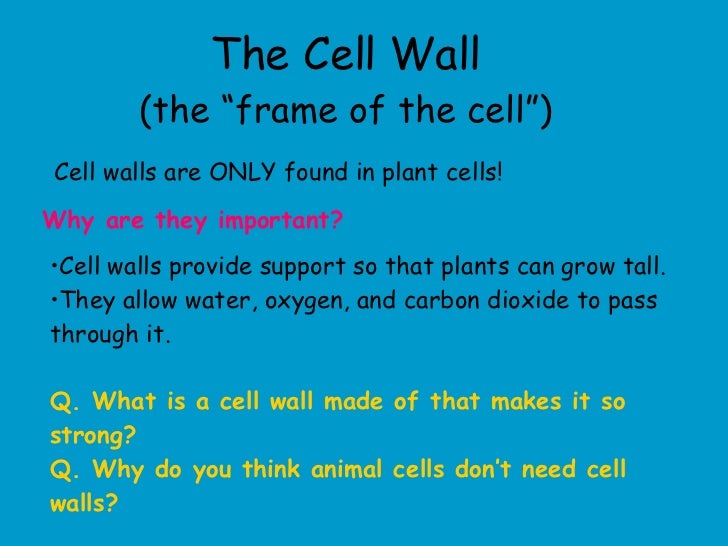
This rigidity allows plants to stand upright without the need for bones or musculature.
Cells are the smallest units of life. The cell wall of a plant keep these large molecules out and plant cells have lytic vacuoles that perform a similar function of the lysosomes in animals. An animal cell does not need chlorophyll, cell wall and chloroplast as they are not autotropds. Plant cells have a cell wall, chloroplasts, plasmodesmata, and plastids used for storage, and a large central vacuole, whereas animal cells do not. As hard as it may be to imagine, biologists believe that at an early point in the evolution of life on earth, plants. All cells have a cell membrane around them. Animal cells and plant cells share the common components of a nucleus, cytoplasm, mitochondria and a cell membrane. A cell structure that forms a maze of passageways in which proteins and other materials are carried from one part of the cell to another. Cell walls, which are found in plant cells, maintain cell shape, almost as if each cell has its own exoskeleton. The animal cell also has two centrioles which a plant cell doesn't have. A cell wall can be described as the outermost layer of a plant cell which provided support and protection to the plant cell. Animal cells have no cell walls, plants do. For example, animal cells do not have a cell wall or chloroplasts but plant cells do.
For example, animal cells do not have a cell wall or chloroplasts but plant cells do. In plant cells, the cell wall gives the cell a rigid, rectangular shape. Having a cell wall is one of the ways a plant can stand up and stay rigid. Animal cells do not have cell walls because they do not need them. Plant and animal cell centrosomes play similar roles in cell division, and both include collections of microtubules, but the plant cell centrosome is simpler and does not have centrioles.
Do animal cells have cell walls? - Quora from qph.fs.quoracdn.net Animal cells do not, plant cells have a cell wall; In plant cells, chloroplasts assist the plants in performing photosynthesis. Plants have very different lifestyles from animals, and these differences are apparent when you examine the structure of the plant cell. A cell wall can be described as the outermost layer of a plant cell which provided support and protection to the plant cell. Animal cells have no cell walls, plants do. Plant and animal cells are both eukaryotic cells, so they have several features in common, such as the presence of a cell membrane, and cell organelles, like the nucleus, mitochondria and endoplasmic reticulum. If useful, an animal has a skeleton. A cell structure that forms a maze of passageways in which proteins and other materials are carried from one part of the cell to another.
Both plant and animal cells have a cell membrane, but animal cells do not have cell walls.
Animal cells and plant cells share the common components of a nucleus, cytoplasm, mitochondria and a cell membrane. Animal cells have no cell walls, plants do. Animals require movement, and if they had cell walls, it would have been difficult for them to do so. In plants, the cell wall is composed mainly of strong fibers of the carbohydrate polymer cellulose. Because it is an animal cell. Centrioles are used for cell division in animal cells during both mitosis and meiosis by helping with the plant cells are usually bigger in size. Cell wall is also present in some other organisms like bacteria. Animal cells have centrosomes (or a pair of centrioles), and lysosomes, whereas plant cells do not. Since animals don't get their energy through photosynthesis (they get it from the animal cells also lack cell walls. Animal cells do not have cell walls because they do not need them. First, animal cells do not have chloroplasts. Animal cells do not, plant cells have a cell wall; The plasma membrane is a fluid, phospholipid bilayer, the cell wall is a rigid, outer structure layer (not found in eukaryotes).
Animal cells do not have a cell wall. Also, animal cell does not require a cell wall as the animal has bones to give shape to it. A cell wall , a large central vacuole , and plastids such as chloroplasts. Animal cells do not, plant cells are. Animal cells do not have a cell wall whereas plant cells do have rigid cell walls.
Why Do Animal Cells Not Have a Cell Wall? | Reference.com from images.reference.com Since all plants are autotrophs, hence they produce their food by the photosynthesis process. Cell walls, which are found in plant cells, maintain cell shape, almost as if each cell has its own exoskeleton. Plant cells contain a cell wall which is made up of cellulose. It serves some functions that are useful to plants, but it is also an inconvenient in other areas. However, plant cells also have features that animal cells do not have: Animal cells do not, plant cells are. Instead of a cell wall, the plasma membrane (usually called cell membrane when discussing animal cells) is the outer boundary of animal cells. Centrioles are used for cell division in animal cells during both mitosis and meiosis by helping with the plant cells are usually bigger in size.
Animal cells however, do not have a cell wall.
Animals require movement, and if they had cell walls, it would have been difficult for them to do so. Animal cells and plant cells share the common components of a nucleus, cytoplasm, mitochondria and a cell membrane. An animal cell does not need chlorophyll, cell wall and chloroplast as they are not autotropds. Cell wall (plant cells only): The animal cell also has two centrioles which a plant cell doesn't have. This layer is called the capsule and is found in bacteria cells.in our body. Cell wall composition varies depending on the organism. Animal cells do not, plant cells have a cell wall; Why do plant and animal cells have so much in common? Animal cells have no cell walls, plants do. Cell walls, which are found in plant cells, maintain cell shape, almost as if each cell has its own exoskeleton. Some cells are covered by a cell wall, other are not, some have slimy coats or elongated structures that push some cells have a thick layer surrounding their cell. In plant cells, chloroplasts assist the plants in performing photosynthesis.


Posting Komentar